Vuk Radovanovic
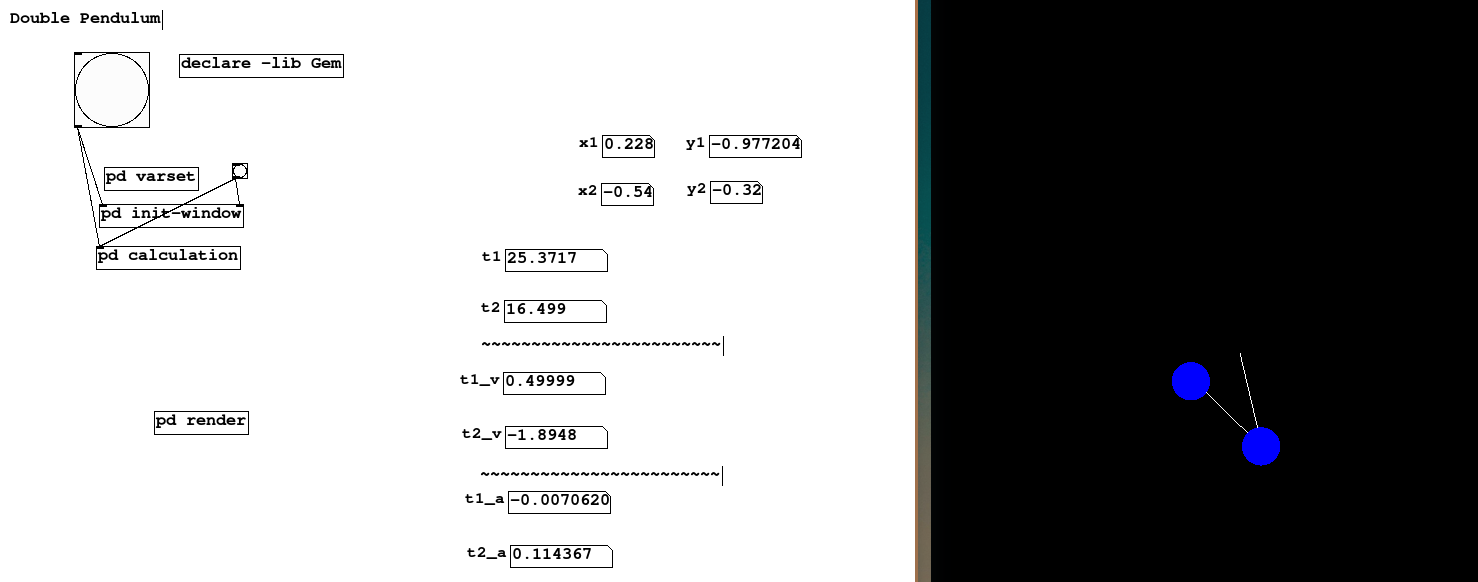
For the final project for MUS171, we had to propose a unique project to the teacher so that no two projects were alike. What I landed on was a fun combination of some of my favorite interests - graphics, physics, and of course, music production. I wanted to create a physics simulation that would drive modulation parameters, and the chaos of a double pendulum seemed perfect for that.
I implemented the Runge-Kutta method, as documented on the web simulation that inspired the project. The patch seems quite simple in hindsight, as most things do, but I remember it being a huge effort that spanned several days, if not weeks. It was my first attempt at using Gem, the graphics library for Pd. Getting familiar with that cost me a day or two of work before I could even get into the weeds of the actual simulation.
As for the simulation…
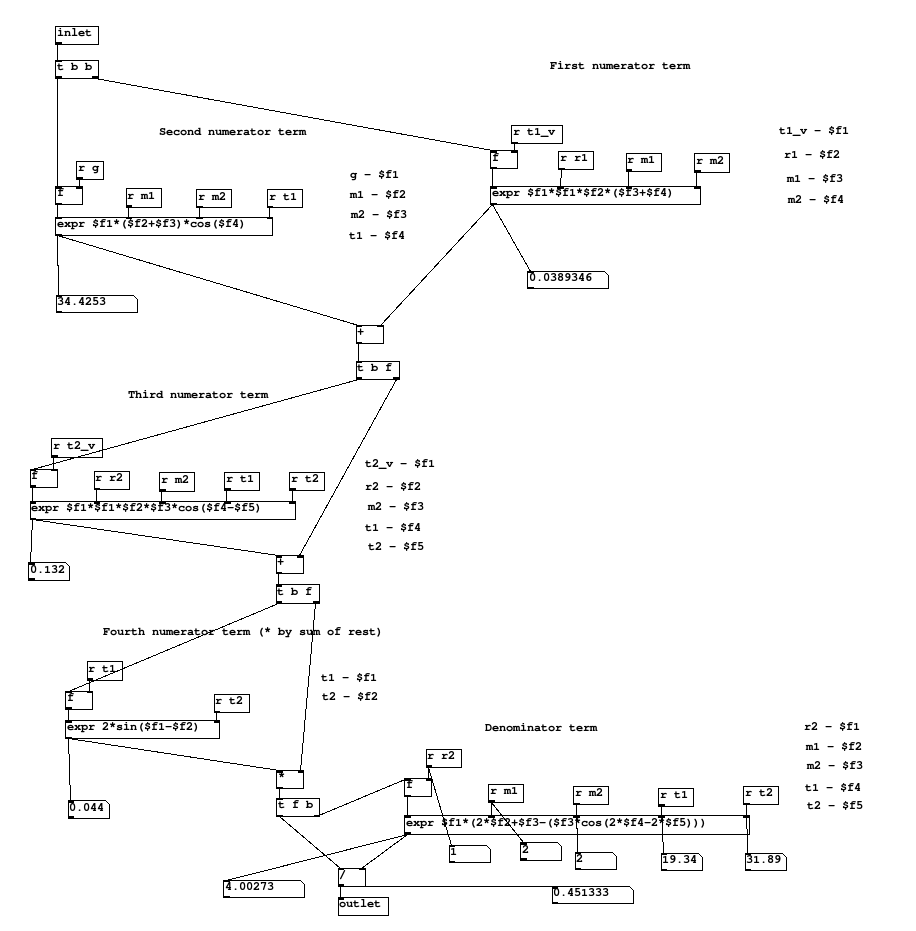
…it was a bit of a mess, but straightforward enough to follow the formulae on the website above. The toughest part was, surprisingly, variable management: organizing all of my sends/receives, and tracking which simulation variables corresponded to which expr variables, turned out to be very human-error-prone. More time than I would like to admit was spent on finding which variables were going into the wrong inlets!
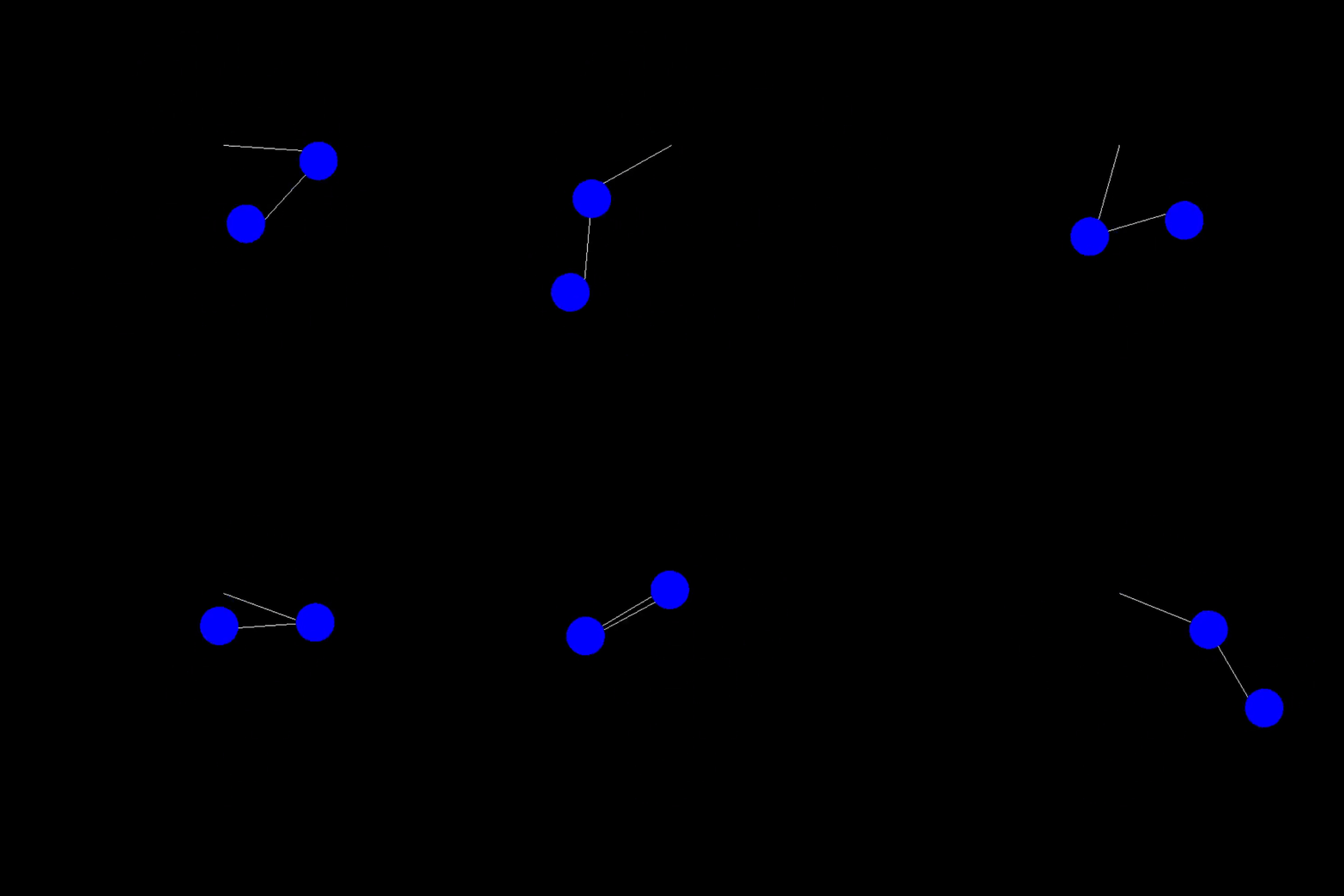
In the end, though, I was left with a fun little simulation, all running natively in Pd without any external physics sim libraries. If you’d like to try it out for yourself, you can grab the patch from my Pd projects repo.
 wheeee